Most Construction Risk Doesn't Show Up Until After the Job Is Done
Warranty claims, insurance disputes, and legal issues often surface after the job is complete. The outcome usually comes down to whether you can prove what happened.
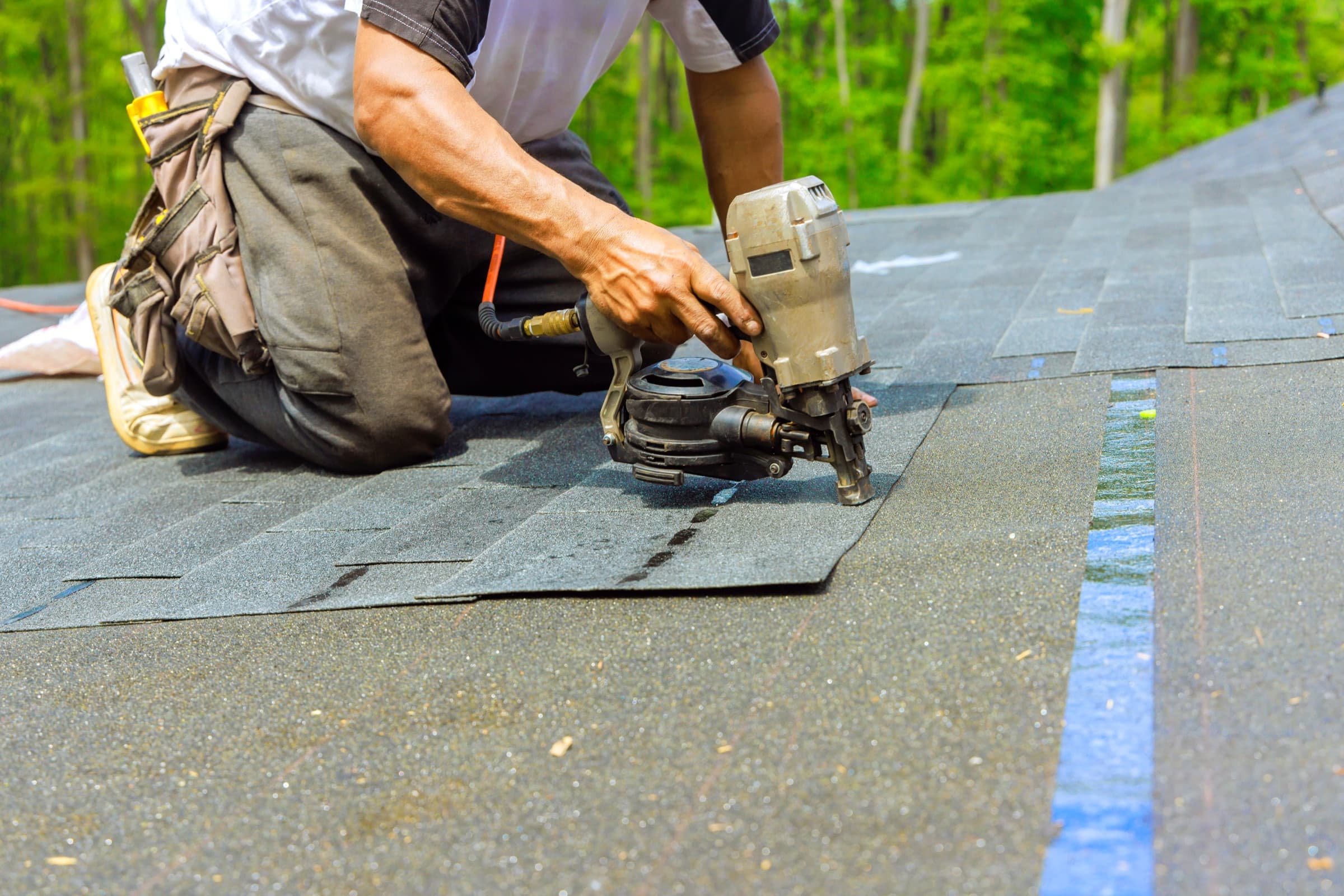
Risk often starts after completion
When a job is complete, most contractors move on; the project is closed, client satisfied. On the surface, everything looks successful.
However, that is not where risk ends. Sometimes that is where it begins.
Warranty claims, insurance disputes, and legal issues rarely happen during the job. They happen later, when one question gets asked: "Can you prove what happened?"
The Problem Isn't the Work, It's the Proof
Most contractors assume that if the work was done correctly, they are protected. Unfortunately, that assumption is wrong, and worse, it creates exposure.
Warranties get denied, insurance claims get challenged, and liability can shift, not because the work was bad, but because the documentation behind the work was lacking something, which then created unnecessary exposure.
In those moments, quality does not matter as much as proof. If you cannot clearly show what was done, when it was done, and under what conditions, you are exposed.
Where Warranty Claims Actually Break Down
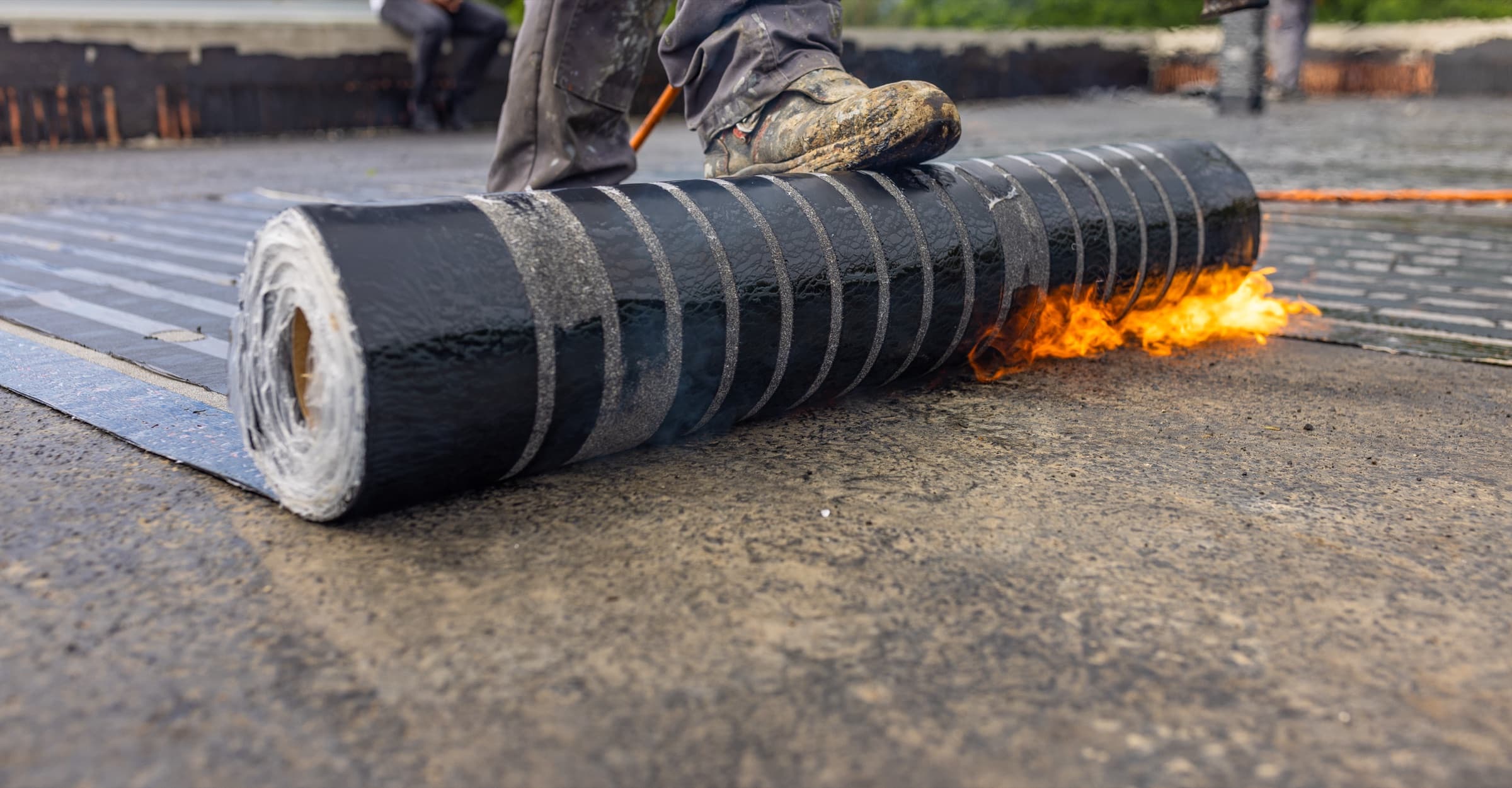
When a warranty is denied, the default explanation is usually workmanship; that is rarely the full story.
Most denials come down to gaps in documentation, missing records, unclear timelines, or no verification of potentially warranty-voiding jobsite conditions at the time of install.
From the outside, it looks like a performance issue. In reality, it is a documentation failure. That distinction matters, because it means the risk is not just in how the work is done, but in how the work is recorded.
Compliance Is Not a Checklist. It's a Record.
Compliance is often treated as an annoying box to check, or a requirement to complete for the job to move forward. That is not enough.
Compliance only protects you if it can be proven later. If the documentation is incomplete, inaccessible, or inconsistent, compliance becomes difficult to defend.
At that point, it is not about whether the work met the standard, it is about whether you can demonstrate that it did.
Liability Gaps Are Created Before Anyone Notices Them
A liability gap rarely comes from a single event. It builds quietly over time through small issues that never get documented.
A missing photo, an incomplete line in a report, an undocumented change to weather condition, each one seems minor in isolation. Together, they create a gap that becomes visible only when something goes wrong.
By the time the issue surfaces, it is too late to go back and capture what was missed.
The Common Thread: Lack of Verifiable Jobsite History
Across warranties, compliance, and liability, the pattern emerges: there is no complete, verifiable record of what happened on the jobsite.
Information exists, but is fragmented; some is stored, some assumed, some lost. When everything goes right, that is invisible. When something is challenged, it becomes the focus for the entire case.
The Shift: From Work Completion to Review-Ready Records
Most systems are built to track progress. Very few are built to protect the contractor after the job is done. The shift needed is simple in concept.
Every step of the job must be documented, time-stamped, and tied to the conditions under which it occurred. Not as an afterthought, but as part of the process itself.
It is not about adding more work, it is about making documentation part of the work.
What Protection Actually Looks Like
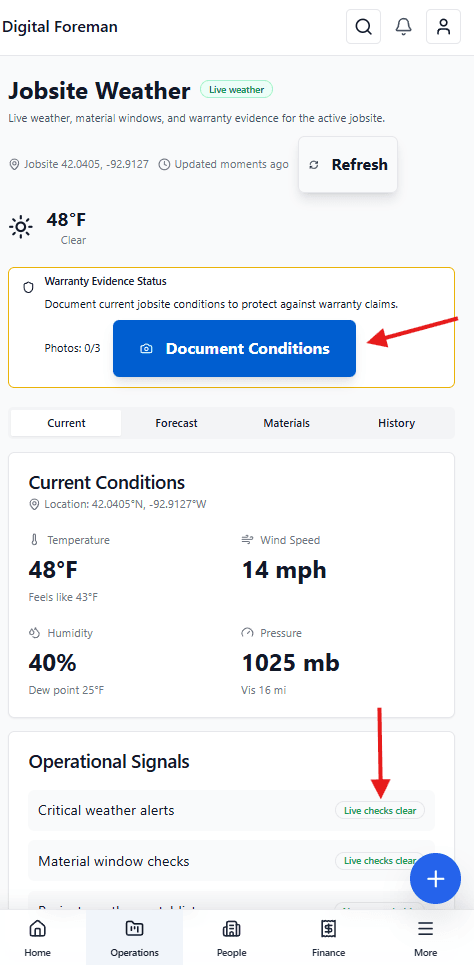
Protection is not a folder of photos or scattered notes. It is a structured record that answers three questions clearly:
- What was done?
- When was it done?
- What conditions existed at the time?
If those answers are incomplete, the record is incomplete. If those answers are clear and verifiable, the contractor has a stronger record for review.
Why This Matters More Than Ever
Insurance companies are seeing things more and more strictly, while warranty providers have become increasingly selective. Even regulatory expectations continue to increase.
That means the overall margin for assumption is shrinking.
Contractors who rely on memory or scattered documentation are taking on risk that is difficult to recover from. The ones that control their documentation can better support the outcome.
How Digital Foreman Closes the Gap
Digital Foreman was built to help every job leave behind a complete, verifiable record.
Documentation can be captured as work is performed so actions stay tied to records you can readily access for proof.
Instead of reconstructing what happened after the fact, the system helps capture it as the work is being done. That is the difference between reconstructing the record later and having a stronger record for review.
Warranty protection
See How Every Job Can Leave Behind a Complete, Verifiable Record
Review the full Warranty Protection system and see how Digital Foreman creates a stronger record for review. In today's environment, the job is not finished when the work is done. It is finished when it can be proven.